Guide
How offshore casino payouts actually work
From the moment you hit withdraw to the money landing, a plain-language guide to what happens, what slows it down, and how to give yourself the best chance of a clean payout.
 Gareth Hintonchecked by
 Paula Ximena Cassiragapub rev
- payouts
- banking
- guides
The one thing an offshore casino has to get right is paying you. Everything else, the games, the bonuses, the interface, is secondary to whether your money comes back when you ask for it. This guide walks through what actually happens between hitting withdraw and the money landing, so you can tell a normal delay from a warning sign.
Step one: the request
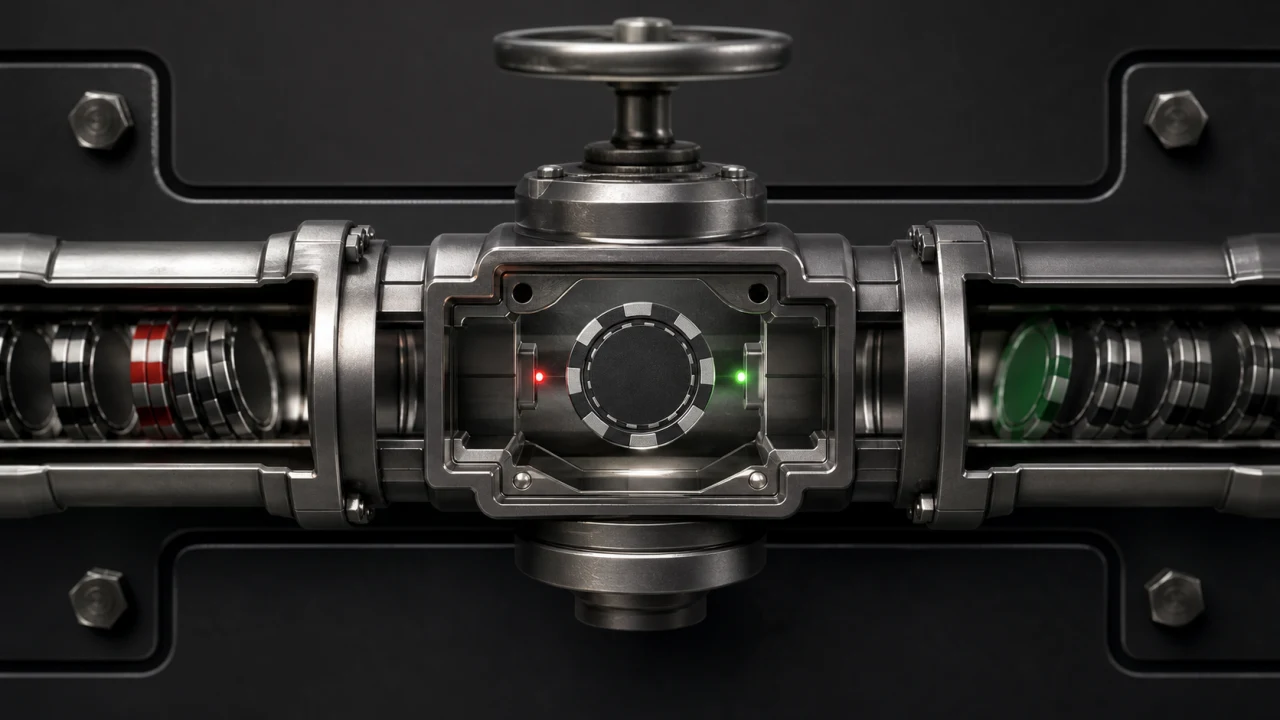
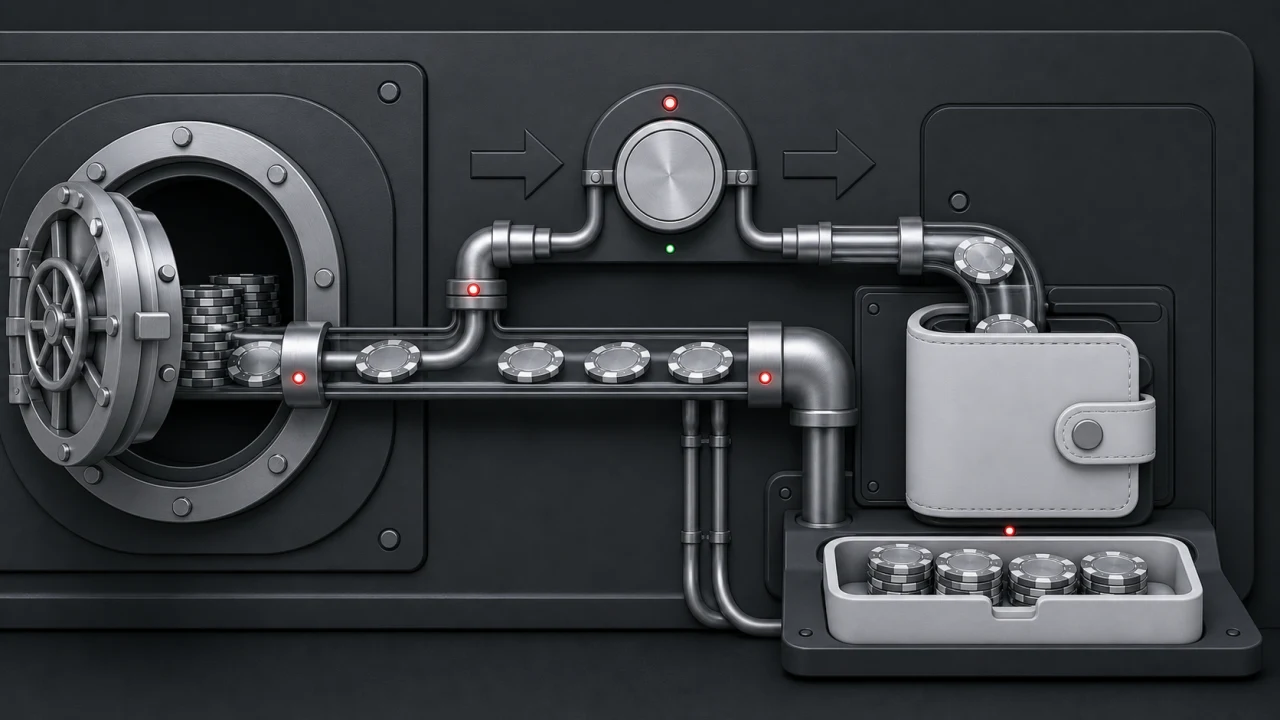
When you request a withdrawal, the money does not leave immediately. It enters a queue at the operator's end. Most sites hold withdrawals in a pending state for a period, partly to process them in batches and partly, less charitably, because a pending withdrawal is one you might cancel and gamble back. Some sites make cancelling deliberately easy for exactly that reason. If you have decided to withdraw, withdraw, and do not let a reverse-withdrawal feature talk you back in.
The pending window exists for ordinary operational reasons too. Payments are usually reviewed and released in batches by a payments team rather than one at a time by a machine, so a request made late on a Friday can sit until the next working batch. A pending period of up to 24 hours is common and not a red flag on its own. What matters is whether that window is fixed and predictable or whether it stretches every time you check. The reverse-withdrawal feature is the part to watch: a site that keeps your money one click away from being back in play is doing that on purpose, and the players it costs the most are the ones who just had a good session and feel like pressing their luck. Treat a withdrawal request as final the moment you make it.
Step two: verification, if it comes
This is where a fast payout becomes a slow one. If the site verifies identity, the withdrawal pauses until you provide documents, usually an ID and a proof of address, sometimes a source-of-funds question on larger amounts. On a Malta-licensed site this is required and normal. On a no-KYC crypto site it usually does not happen at all, which is what makes those fast.
KYC, short for know your customer, is the identity check a regulated operator is obliged to run. The standard set is a government photo ID to prove who you are, a recent utility bill or bank statement to prove where you live, and on larger sums a source-of-funds question that asks you to show the money you are playing with came from somewhere legitimate. A clean pass usually needs documents that are current, fully legible, and matching the name and address on your account. The most common cause of a stuck verification is not suspicion but a blurry photo, a cropped corner, or a bill that is a few months too old, so it pays to send clear files the first time.
The trap is the site that asks for verification only when you try to withdraw a large win, having asked nothing on deposit. It is not always a scam, sometimes it is a genuine fraud control, but it lands hardest on players who chose the site to avoid checks. The defence is simple: verify as soon as you open the account, before you have a balance waiting, so this step is already done. Front-loading the check turns a payout-day delay into a five-minute task you dealt with while you had nothing on the line, and it also tells you early whether a site's verification process is reasonable or a mess.
Step three: processing and the method
Once approved, the payout goes out by your chosen method, and the method decides the speed. Crypto is fastest, often under an hour, because there is no bank in the chain. Cards and bank transfers take one to three days, sometimes more, because the banking system adds its own delay and payments to unlicensed operators can face extra scrutiny.
The reason the method matters so much is that a card or bank withdrawal passes through several hands after the operator releases it. Your payout is handed to a payment processor, which routes it through the card networks or the interbank system, each of which runs its own clearing and settlement steps on business-day schedules. Because the operator is offshore and often unlicensed in your country, banks in that chain apply extra checks to the transaction, and some decline or hold it outright. A crypto payout skips all of that. Once the operator signs the transaction it goes straight to the network, and the only wait is for the blockchain to confirm it, which is minutes rather than days.
There is nothing you can do about the banking delay itself, but you can choose the fast rail. If speed matters to you, a stablecoin withdrawal at a site with a clean record is the quickest path from balance to wallet. A stablecoin is a crypto token designed to hold a fixed value, usually one to one with the dollar or euro, so it gives you crypto's speed without the price of the coin drifting between the moment you withdraw and the moment you cash out. Withdrawing to a volatile coin can mean the amount that lands is worth noticeably more or less than the balance you started with, which is a risk stablecoins are built to remove.
Step four: the limits that stretch a win
Even an approved, fast withdrawal can be paid slowly if the site caps how much you can take out. Daily, weekly and monthly limits are common, and the slowest sites in our set pair a low cap with a slow window. A 1,000 euro daily cap turns a 5,000 euro win into a five-day payout in installments. This is not the site refusing to pay; it is the site paying on its own schedule. We record these caps on every review, because they matter more to a winner than the headline speed.
What a warning sign looks like
Most delays are ordinary: a verification step, a banking hold, a withdrawal cap. A genuine warning sign is different. It looks like a site that approves the withdrawal, then finds a new document to request, then another, each one resetting the clock. It looks like a bonus balance voided on a technicality discovered only at cashout. It looks like support going quiet the moment a large withdrawal is requested. These are the patterns that separate a slow site from a bad one, and they are why we test a withdrawal before ranking any operator.
Giving yourself the best chance
Four habits cover most of the risk. Verify your identity up front, so a document check never blocks a payout you are waiting on. Use crypto if you want speed, and a stablecoin if you do not want the coin price moving your balance. Read the withdrawal limits before you deposit, not after you win. And test a small withdrawal before you trust a site with a large balance, which is the one check that tells you what a site will actually do when it matters. The reviews are built around these exact questions, and the main market pages rank the sites that pass them.